All posts by Steve Stern

Manfred Hilsenrath R. I. P.

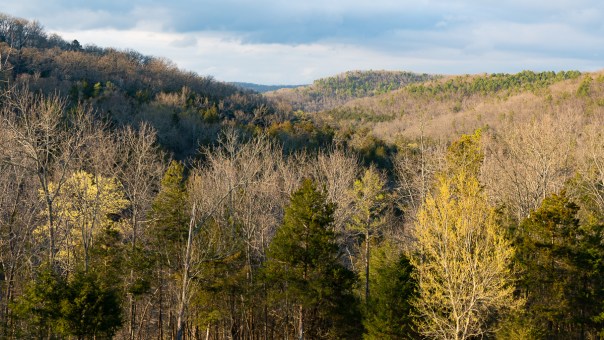
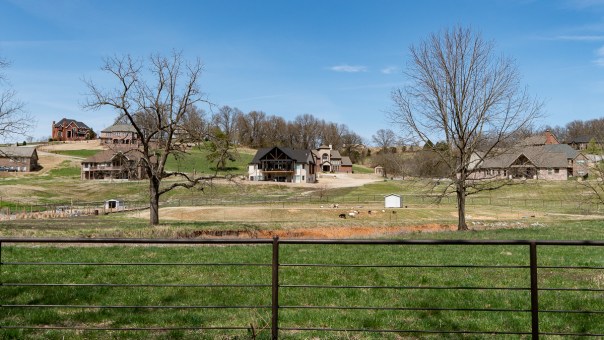
Michele and I are near the small town of Fairfield Bay on Greers Ferry Lake in the Ozark Mountains of northern Arkansas. We have joined a gathering of the Hoenigsberg and Hilsenrath families who have come together to say “Goodbye” to the family’s patriarch, Manfred Hilsenrath, who we know as Michele’s cousin Fred. Fred was one of those truly unusual people who is loved and touched by everybody who meets him. He was born In Germany in 1929 and came of age in a Romanian ghetto camp in Ukraine. His journey from there to being married to Eleanor, a woman he was madly in love with, in a beautiful home in the Ozarks, via Saratoga California, is both emblematic of the postwar Jewish journey and particular to him. Yesterday, at an event that was nominally a Memorial Service, each speaker – fighting off tears as they talked about their connection to Fred – wove a tapestry that was a celebration of an extraordinary life. A life that exemplified hope, triumph over adversity, the power of connection, and the power of passion. I am aware that I am an inlaw in this family, but the warmth and love of the family are all-inclusive just like Fred and Eleanor.

A Little Housekeeping

Steve had the echo yesterday and his heart is strong. They are traveling to Arkansas and he will have the reboot when they return. In case you all were wondering like I was. Karen Amy on Facebook.

I’m a little embarrassed that I didn’t put this out myself – so, Thanks, Karen – but it was a sort of no news thing. I had what my cardiologists calls a stress test in which I got an ultrasound and a reading of a radionuclide – I don’t really know what that word means either – isotope injection of my resting heart, then walk on a treadmill programmed with a standardized protocol that increases speed and grade every three minutes. When I’m whopped, they repeat everything. The whole procedure is interesting the first couple of times and mildly uncomfortable thereafter. The isotope is injected through an IV in my hand – while I’m on the treadmill – and I can feel it enter my body, which is slightly creepy.

Then, nothing for a day because the isotope readings take a little time to decipher. I usually take a default position that everything came out fine until I hear otherwise so the phone call saying my heart is strong didn’t change much. Of course, saying my heart is strong is not exactly the same as saying that everything is fine; it is sort of like saying a car works great except for the constant backfiring. The good news is that I am healthy enough to try a reboot and, if that doesn’t work, an ablation. 

Meanwhile, my cardiologist has gone skiing and Michele and I have gone to Arkansas for a Memorial Service for her Cousin Fred.


I


AFib, Damn it

Cardiac arrhythmia. cardiac dysrhythmia or irregular heartbeat. Medical illustration

I got diagnosed with Atrial Fibrillation yesterday. Again. I was going to Cardiac Rehabilitation and walking across the parking lot to the gym at Sequoia Hospital left me out of breath and, I have to admit, panicky. Worse, my blood pressure was up and the oxygen level in my blood was low. I kept telling myself that I was OK, it was just a residual from my cold, and that being in Sequoia Hospital was probably one of the best places I could be, they could test me, find something like a thorn in my leg which they could easily remove, and send me on my way completely fine. Ahhh, the joy of magical thinking. Long story short, the nurse at the gym didn’t find the magic thorn so she sent me to my cardiologist, across the parking lot, where she had a tech give me an EKG.

I was sort of relieved that it is Afib and not a heart attack but, as reality sinks in, I am starting to get bummed out. Afib is not a good deal either. Now they are thinning my blood – at $380 for a month’s supply! they sure know they’ve got us by the short and curlies – because the worry is a stroke caused by a blood clot formed by the blood not going smoothly through my pump. In a couple of weeks, they will give me a stress test and then if all goes well, they’ll stop my heart, wait a few seconds, and then reboot me. It is a lot scarier for Michele because I’ll be out, but it is pretty safe (it always works in the movies and usually in real life). In the meanwhile, I feel punk but not panicky.

It’s a different life in the Twitterverse

Komodo Dragon attacks poor goat

Over @NatureisScary, somebody posted the picture and heading above. Some of the comments made me laugh out loud:

He’s already getting eaten did you really have to bring up his economic status too?
Why tf would you be a goat on the island of Komodo? …It said he was poor, he probably couldn’t afford to move.
You just assumed the goat’s financial situation because it’s brown??
Why was the goat making itself accessible? Goats shouldn’t look so tasty around predators! I blame the goat.
So the rich one escaped?
I bet you would have blured out his face for his dignity if he was a rich goat but no, the poor have no value in your eyes!
My thoughts and prayers are with the goat. Sending light.
That is not how goat yoga is supposed to go.
“Impoverished goats have nothing to lose but their cha-a-a-a-ins” -Karl Marx

N

Thinking About Learning From the Past

So far, this has been a strange year. My plan was to get out more, then I tore my left meniscus, then I got a nasty winter cold. While this was going on, Michele’s cousin, Fred Hilsenrath, died and her step-fathers best friend died. In the background, it is raining and raining and raining. Before my meniscus tore and the rains settled in, I did get out.

Like a lot of kids my age, I had a Lionel toy train set. As I got older, that morphed into pretty large HO scale model railroad that took over much of the end wall of my bedroom and an interest in real trains. I think that Railroads represented freedom when I was young, probably about nine or ten, and first took the train to San Francisco on my own. For a couple of years, probably when I was 13 and 14, a friend and I took the train, alone, to the State Fair in Sacramento as part of a trip that included taking a steam ferry, the Eureka, across the Bay to Oakland, a train to Sacramento, and a streetcar to the Fair (where we would always look at the huge model railroad among other delights). Fortuitously, I think, railroads completed the switch from glorious steam to boring diesel at about the same time I lost interest because I had discovered cars and girls.

Last month, the end of January, actually, I went to Sacramento with Burt Kuhlman to see The California State Railroad Museum. I had not been there since the opening week and it didn’t seem much different than it was in my memories. The problem with railroad museums is that engines are so big, so heavy and hard to move, that it is hard to have more than a couple of them and no museum is going to have a large collection. In the whole country, there are only 45 full-size steam locomotives built prior to 1880, this Museum has eight of these but that is still not very much. One of my favorites is the Governor Stanford. The Governor Stanford built in Philadelphia 1862, disassembled, put in crates, and shipped around the horn to San Francisco. The engine was then put in service hauling freight over the Sierras when they were building the Transcontinental Railroad. It went back and forth between Sacramento and, eventually, Promontory Summit in Utah where an actual Golden Spike was driven in to mark the connection of California to the East 1869.

Looking at the Governor Stanford, it just seems so small and open to go the 750 miles, over the Sierras, through Nevada, and across Western Utah in all kinds of weather. Only forty years later, behemoths, like the one below at 266 tons, started hauling long trains over the same route (and over the Tehachapis some 350 miles, or so, to the south). This particular locomotive was delivered to Southern Pacific in 1944 and was the last steam locomotive they bought. The world was changing, steam engines were sold for scrap and the world changed to diesel.

What struck me most about the difference between the two locomotives is how similar they are. Each generation of locomotives was built with the rules and thinking of the last generation. There is no sense of thinking out of the box, at looking at the problem with fresh eyes. They are stunning human artifacts and they infer that it is very hard to change a way of doing something.